Don’t Step Wrong 2 is the sequel to the original Don’t Step Wrong, a puzzle game that started as a small itch.io experiment. The premise is simple: every level has one implicit rule. The game never tells you what it is. You figure it out through trial and error.
That’s rule discovery, a sub-genre of puzzle game built on the idea that finding the logic is the puzzle, not executing it.
The original proved the concept. DSW2 builds on it in three directions.
New mechanics
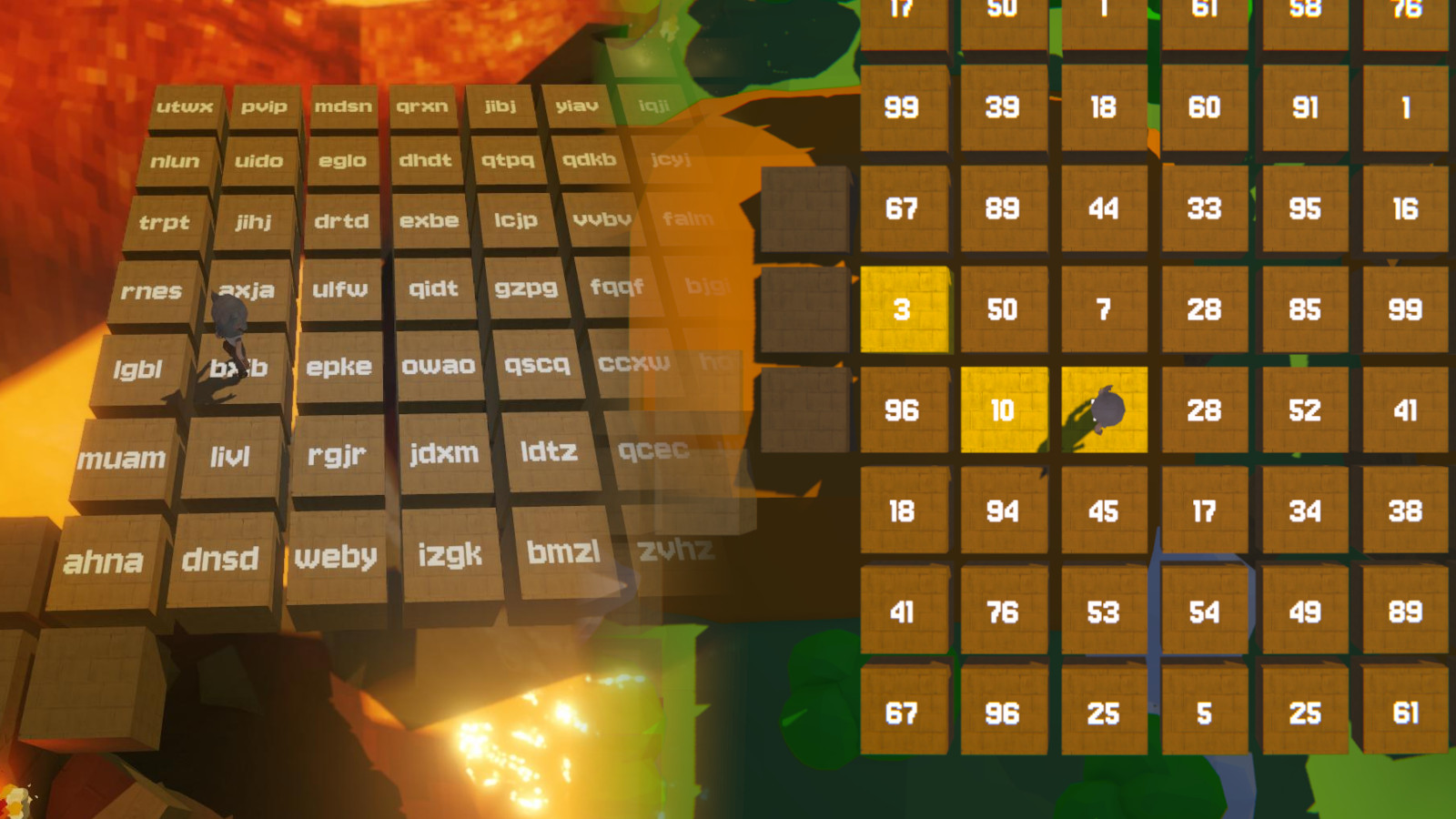
The first game had a limited set of rule types, mostly numerical. If you played it, you know the pattern: look at the numbers on the blocks, step on the ones that follow the rule, fail a few times, figure it out.
Don’t Step Wrong 2 expands that into dozens of rule categories. Numeric patterns are still there, but they share space with word-based rules, time-based constraints, general knowledge, and types I won’t name yet. The categories introduce themselves as you progress. You don’t see everything at once.
What stays the same is the core: no tutorial, no explanation, no hints by default. You observe, form a hypothesis, test it.
Biomes
The first game had one visual environment. DSW2 has ten zones, each with a distinct visual palette.
You start in the Green Forest. It’s where the game teaches the system without explaining it. From there you move through a river crossing, ruins, a swamp, deserts, mountains, and eventually a volcano. Each zone looks different and, more importantly, plays differently. The rules that apply in the forest don’t necessarily carry over.
It’s not just an aesthetic decision. The visual shift signals a logic shift. When the world changes, you expect the rules to change with it.
Skills and items
The original had no skills or items. Don’t Step Wrong 2 adds two categories of optional tools you can unlock and equip.
Skills are permanent abilities: Spider Sense, Breadcrumb Trail, Safe Start, Dead End Sense, Super Jump, Farmer and Freezer. They don’t reveal the rule. What they do is help you navigate without spoiling the discovery.
Items are single-use consumables: Reveal Achievement, Double Blocks, Hint Unlock, Board Lock, Valid Block and Rules Reveal. Each one bends a specific part of the puzzle without breaking it.
Neither category tells you the answer. They give you different ways to approach the problem. Both are entirely optional. If you want the raw experience, no assist, no safety net, you can play that way. The mechanics page has a full breakdown of what each one does.
Is the demo available?
Yes. A free demo is available on Steam right now. It covers the first zone and gives you enough levels to understand whether the game is for you.
If you played the original on itch.io, it should feel familiar, and different enough to feel worth it.